
Key Takeaways
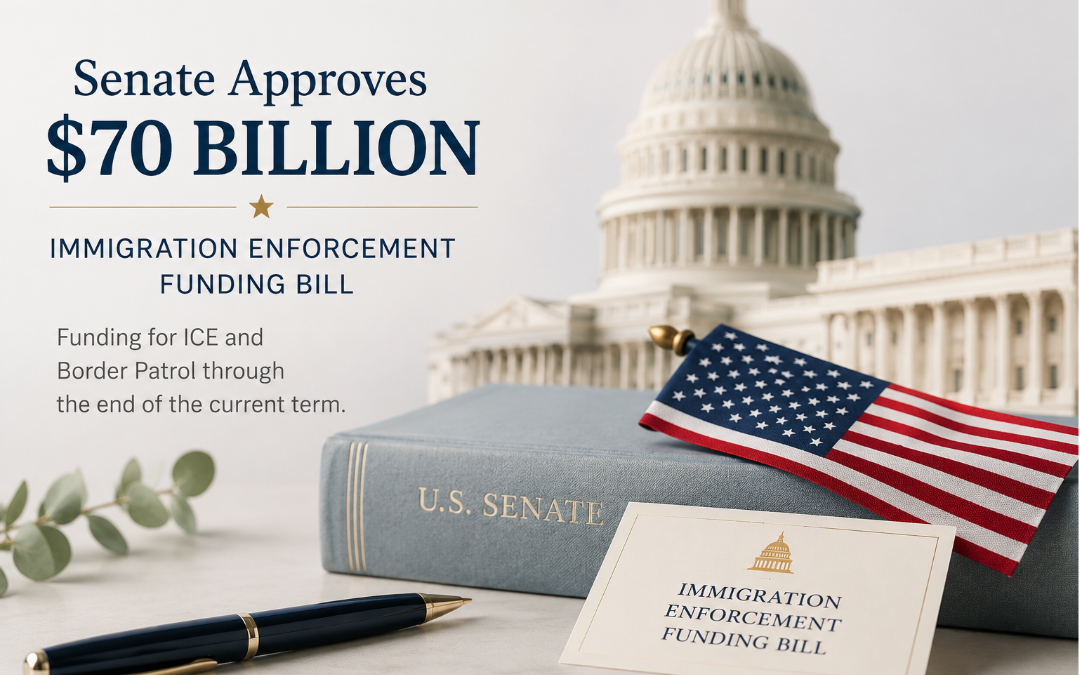
- The U.S. Senate has approved legislation providing approximately $70 billion in funding for Immigration and Customs Enforcement (ICE) and U.S. Border Patrol.
- The funding would support immigration enforcement operations through the remainder of President Trump’s current term.
- The bill passed the Senate on a largely party-line vote and now moves to the House of Representatives for consideration.
- The legislation focuses on operational funding for immigration enforcement agencies rather than changes to immigration eligibility or visa programs.
- The measure could affect future enforcement resources, staffing levels, and border security operations.
The U.S. Senate has approved a major immigration enforcement funding package that would provide approximately $70 billion for Immigration and Customs Enforcement (ICE) and U.S. Border Patrol operations over the next three years.
The legislation passed the Senate on June 5, 2026 and now heads to the House of Representatives, where lawmakers are expected to consider the measure in the coming days.
What Does the Bill Fund?
According to reports, the legislation is intended to provide funding for immigration enforcement agencies through the remainder of President Trump’s current term.
The funding would support:
- Immigration and Customs Enforcement (ICE)
- U.S. Border Patrol
- Related immigration enforcement activities
- Border security operations
The bill does not create new immigration pathways, visa categories, or green card programs. Instead, it focuses primarily on agency funding and operational resources.
What Could This Mean for Immigration Processing?
While the legislation is primarily a funding measure, increased resources for enforcement agencies may influence how immigration laws are administered and enforced.
Potential areas of impact could include:
- Enforcement operations
- Border security activities
- Detention and removal proceedings
- Agency staffing and operational capacity
At this stage, the bill does not directly change eligibility requirements for visas, permanent residence, or citizenship. Any future policy changes would generally require separate legislative or administrative action.
What Happens Next?
The legislation must still be considered by the House of Representatives before it can become law.
If approved by the House and signed by the President, the funding would provide resources for immigration enforcement agencies through the end of the current presidential term.
As the process continues, immigration professionals, employers, and applicants will be watching closely for any operational changes that may result from increased agency funding.
What This Means for Individuals Navigating US Immigration
For most applicants, the immediate effect is limited because the bill primarily concerns agency funding rather than immigration benefits.
However, funding decisions can influence how immigration laws are enforced and how agencies allocate resources in the future.
Individuals with pending immigration matters should continue monitoring official government announcements and consult qualified professionals if they have questions about how evolving policies may affect their specific circumstances.
Need Guidance on US Immigration Matters?
Immigration policies and enforcement priorities can evolve quickly. If you have questions about visas, permanent residence, citizenship, or broader US immigration matters, the team at Pilkington Immigration can help you understand your options and stay informed about changes that may affect your plans.
Sources