
Key Takeaways
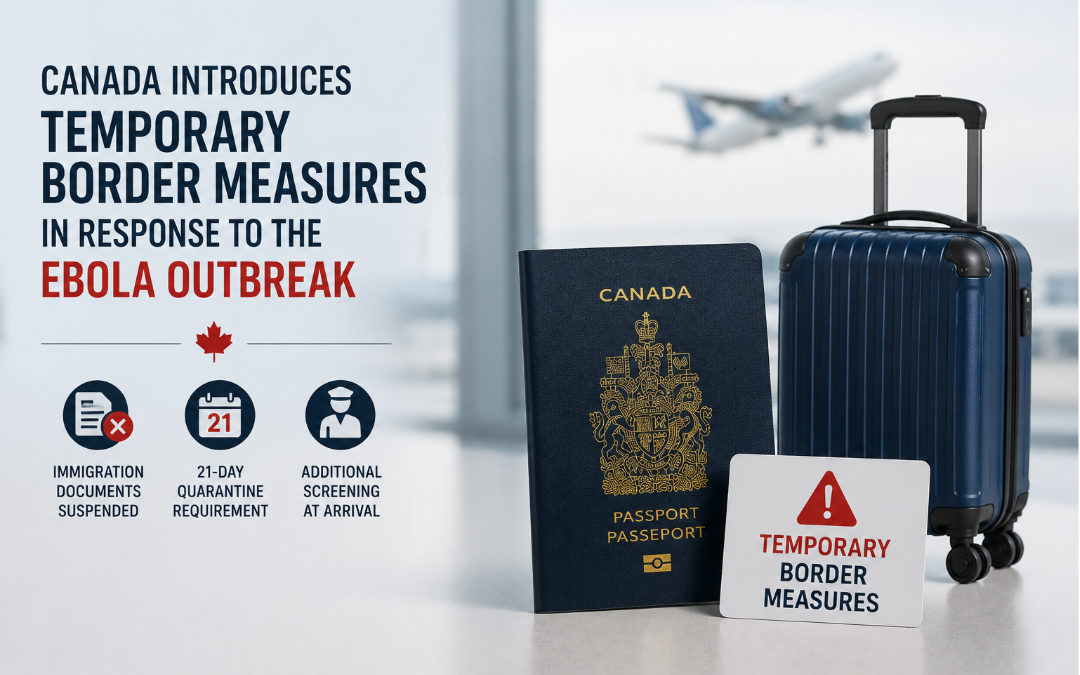
- Canada has introduced temporary border measures in response to the Ebola disease outbreak in parts of Africa.
- Immigration documents for residents of the Democratic Republic of the Congo, Uganda, and South Sudan are being suspended for 90 days.
- Certain travelers who have recently been in affected regions may be required to complete a mandatory 21-day quarantine upon arrival in Canada.
- Canadian citizens and permanent residents may still return to Canada but will be subject to screening and public health requirements.
- Current measures are scheduled to remain in place through late August 2026.
The Government of Canada has announced temporary border measures designed to reduce the risk of Ebola disease entering and spreading within Canada.
The measures were introduced following an Ebola outbreak in the Democratic Republic of the Congo and growing concerns about regional transmission risks in Uganda and South Sudan. Canadian officials have emphasized that the overall risk to people in Canada remains low but have taken a precautionary approach given the seriousness of the disease and evolving international conditions.
Immigration Documents Temporarily Suspended
Beginning May 27, 2026, Canada suspended certain immigration documents for residents of countries currently identified as having a high or very high Ebola outbreak risk.
At the time of the announcement, the affected countries included:
- Democratic Republic of the Congo
- Uganda
- South Sudan
According to the federal government, the suspension applies to:
- Temporary Resident Visas (TRVs)
- Electronic Travel Authorizations (eTAs)
- Permanent Resident Visas
Individuals who already possess approved documents may be unable to travel to Canada while the suspension remains in effect. In addition, immigration officials have indicated they intend to temporarily pause decision-making on certain applications from residents of the affected countries.
New Quarantine Requirements for Certain Travelers
Additional measures took effect on May 30, 2026.
Travelers who have been in the Democratic Republic of the Congo, Uganda, or South Sudan within the previous 21 days may be subject to public health screening and mandatory quarantine requirements upon arrival in Canada.
The requirements may apply to:
- Canadian citizens
- Permanent residents
- Individuals registered under the Indian Act
- Foreign nationals
Travelers who do not have symptoms may be required to complete a 21-day quarantine period. Those who are unable to safely quarantine elsewhere may be provided with an appropriate location. Travelers displaying symptoms may be referred for further medical assessment and isolation measures.
Who Is Not Affected?
The government has clarified that individuals already inside Canada are not impacted by the new measures and may continue their authorized stay.
Canadian citizens and permanent residents retain the right to return to Canada but should expect additional screening and compliance requirements if they have recently visited affected regions.
Why Canada Is Taking Action
Canadian officials describe the measures as precautionary and based on public health considerations.
According to government statements, there has never been an imported case of Ebola disease in Canada, and there are currently no Ebola cases reported in North America. However, officials say temporary controls are intended to reduce risk while the international situation continues to evolve.
The government has also noted that the measures may be adjusted, extended, or lifted depending on future public health assessments and developments abroad.
What This Means for Travelers and Immigration Applicants
Individuals with travel plans involving affected countries should closely monitor government announcements and travel advisories.
Applicants with pending immigration files connected to the Democratic Republic of the Congo, Uganda, or South Sudan may experience delays or temporary processing interruptions while these measures remain in effect.
Travelers should also be aware that border measures can change quickly in response to evolving public health conditions.
What the Ebola Response Means for Canadian Immigration and Travel
Canada’s temporary response to the Ebola outbreak demonstrates how public health concerns can directly affect immigration processing, travel authorization, and border entry requirements.
While the current risk to Canadians remains low, travelers and immigration applicants should remain informed about ongoing developments and any changes to Canada’s border policies.
If you have questions about Canada border measures, travel restrictions, visa eligibility, or Canadian immigration requirements, the team at Pilkington Immigration can help you understand how evolving government policies may affect your plans.
Sources