
Key Takeaways
- Canada is changing how income requirements are calculated for the parents and grandparents super visa.
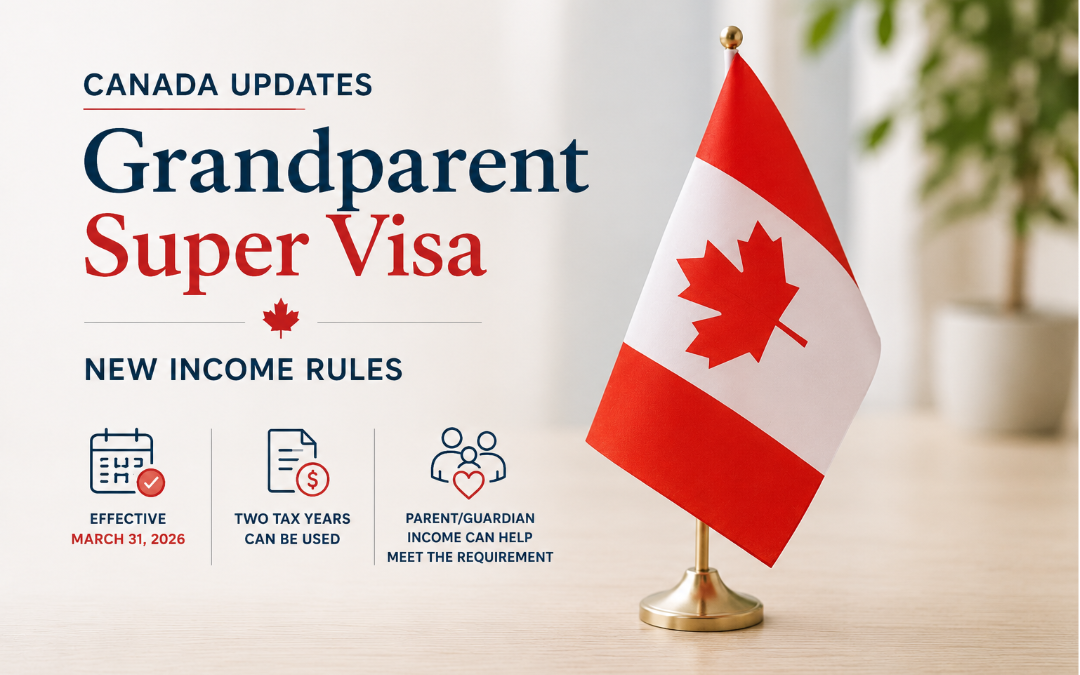
- The new rules take effect on March 31, 2026.
- Hosts may now qualify using income from either of the two previous taxation years.
- In some cases, the income of the visiting parent or grandparent can be included to help meet eligibility requirements.
- The changes apply to both new applications and applications already being processed.
Families hoping to reunite with parents and grandparents in Canada may soon find it easier to qualify for a grandparent super visa.
Immigration, Refugees and Citizenship Canada (IRCC) recently announced updates to the program’s income assessment rules that are intended to make the super visa more accessible while ensuring visiting family members remain financially supported during their stay.
The changes take effect on March 31, 2026 and will apply to both newly submitted applications and applications already in processing.
What Is the Super Visa?
The parents and grandparents super visa is a multiple-entry visitor visa that allows eligible parents and grandparents of Canadian citizens and permanent residents to stay in Canada for extended periods.
Unlike a standard visitor visa, the super visa is designed specifically to support family reunification by allowing longer visits while maintaining temporary resident status.
To qualify, applicants must have a host in Canada who meets certain income requirements and agrees to provide financial support during the visit.
What Is Changing?
IRCC is introducing two new options that may help families satisfy the income requirement.
Income From Two Tax Years Can Be Used
Previously, immigration officials assessed income based only on the taxation year immediately preceding the application.
Beginning March 31, 2026, hosts and co-signers may qualify by meeting the income requirement in either of the two taxation years preceding the application.
This additional flexibility may help families who experienced temporary income fluctuations in one year but otherwise have a stable financial history.
Visiting Parents’ or Grandparents’ Income May Be Counted
The second change allows some families to include the income of the visiting parent or grandparent when calculating eligibility.
Under the updated rules, if the host and any co-signer meet a required minimum percentage of the income threshold, the visiting family member’s income may be used to help bridge the remaining gap.
This could benefit families who previously fell just short of the income requirement despite having financially independent parents or grandparents.
Why This Matters
The announcement comes shortly after Canada confirmed that no new Parent and Grandparent Program (PGP) intake would open in 2026.
For many families, the super visa has become one of the primary options for bringing parents and grandparents to Canada for extended visits.
By expanding the ways families can demonstrate financial eligibility, IRCC aims to support family reunification while maintaining safeguards that help ensure visitors are adequately supported during their stay.
What Applicants Should Know
According to IRCC, families who already qualified under the previous rules will continue to qualify.
However, applicants who wish to benefit from one of the new eligibility options must provide the appropriate documentation demonstrating that they meet the updated income requirements for their family size.
The new rules will automatically apply to:
- Applications submitted on or after March 31, 2026
- Applications already being processed as of March 31, 2026
What This Means for Families Considering a Super Visa
For families who may not have qualified under the previous income assessment model, these changes could create new opportunities to reunite with parents and grandparents in Canada.
The added flexibility may be particularly valuable for households with fluctuating income or for families whose visiting relatives have their own financial resources available to support their stay.
As Canada continues balancing immigration targets with family reunification goals, the super visa remains an important pathway for keeping families connected.
Need Help With a Grandparent Super Visa Application?
Understanding income requirements, supporting documentation, and eligibility rules can be challenging, especially when program requirements change. If you have questions about a grandparent super visa, the team at Pilkington Immigration can help you understand your options and prepare a strong application for your family.
Sources